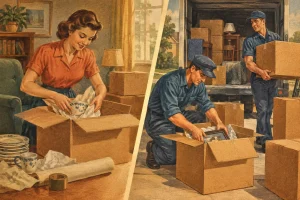


A move can expose just how much a household has gathered over the years: spare chairs in the garage, linen cupboards packed to the back, children’s belongings that no longer fit their lives, and boxes that have not been opened since the last address. Downsizing before a house move gives you the chance to make deliberate decisions before those items become another load to pack, carry, transport and unpack.
Done well, downsizing is not about getting rid of everything. It is about taking what is useful, valued and right for your next home, while reducing the cost, effort and clutter that can make moving day harder than it needs to be.
Why downsizing before a house move pays off
Every item you keep needs to be handled. It takes time to wrap, space in a box, room in a truck and energy to unpack at the other end. A lighter move can mean fewer boxes, a more straightforward removal plan and less to organise once you have the keys.
There is also a practical financial benefit. Removal costs are often influenced by the volume of belongings, access at each property and the time required to complete the work. If you are paying for storage, reducing volume can be particularly worthwhile. There is little value in storing items for months if you already know they will not suit your next home.
Most importantly, downsizing creates a calmer start. Rather than filling a new place with possessions by default, you can set it up for the way you live now. That may mean making room for a home office, choosing simpler furniture for apartment living, or leaving space for a growing family.
Start with the new home, not the old one
The most useful question is not, “Can I throw this away?” Ask, “Where will this live in the new home?” If there is no clear answer, the item deserves a closer look.
Obtain a floorplan where possible, or measure key rooms and doorways before you decide what comes with you. Large lounges, dining settings, wardrobes and fridges can look manageable in a familiar home but prove awkward in a smaller unit, terrace or regional cottage. Check stairwells, lifts, narrow hallways and parking access as well. A piece that fits inside may still be difficult or expensive to move safely into place.
Think about your new lifestyle too. A spare bedroom may become a study. A large garden shed may be replaced by a small balcony. If you are moving closer to work, family or public transport, you may no longer need duplicate household gear or sports equipment that has been sitting unused.
Make decisions room by room
Trying to assess an entire house at once is tiring and often leads to postponing decisions. Work one room at a time, beginning with low-emotion areas such as the laundry, bathroom, pantry, garage or garden shed. These spaces usually contain expired products, duplicate tools and items that can be responsibly discarded without much debate.
Then move to bedrooms, living areas and sentimental belongings. Set a realistic time limit for each session. A short, focused block is more effective than an exhausting weekend spent pulling everything out without finishing anything.
Use four clear categories: keep, sell or donate, recycle, and dispose of. Avoid a fifth pile marked “maybe” unless you give it a decision date. Unresolved boxes tend to travel from home to home without being used.
What to keep, release and handle carefully
Keep the belongings that earn their place. This includes furniture that suits the new layout, everyday kitchenware, clothing you wear, essential paperwork and items with real personal value. “Real” is the key word. An object can be sentimental without needing to keep every version of it.
For inherited collections, children’s artwork or meaningful keepsakes, consider choosing a small representative selection. Photograph larger items before passing them on, particularly if the memory matters more than the object itself. Speak with family early if an item may be wanted by someone else. Clear conversations prevent rushed decisions in the final week before a move.
Selling can work well for quality furniture, appliances, collectibles and tools, but be realistic about timing. Online listings, collection arrangements and no-shows can add pressure. If an item has not sold by your chosen deadline, decide whether donation is the better outcome. Holding up a move for a few small sales rarely makes sense.
Donation is a practical option for clean, safe and usable goods. Local charities, community groups and op shops may accept suitable clothing, books, household items and furniture, but requirements differ. Contact them before loading the car or arranging a collection.
Recycling deserves separate thought. E-waste, batteries, paint, chemicals, mattresses and whitegoods should not simply be left on the kerb or mixed with household rubbish. Check the appropriate council or specialist disposal service for your area. This protects the environment and avoids creating a last-minute problem for your movers or the new owners.
Do not treat valuable items as ordinary clutter
Antiques, fine art, collectables and family heirlooms need a different assessment. You may decide not to keep every piece, but avoid donating, selling or disposing of anything valuable in a hurry. Seek a valuation where appropriate, keep records of provenance, and consider the safest packing and transport method before moving it.
If a valuable item is staying, tell your removalist well before moving day. Specialist handling may require custom packing, protective materials or a separate transport plan. The same applies to fragile mirrors, large artwork, pianos and unusually heavy furniture.
Build downsizing into your moving timeline
Start earlier than feels necessary. For a typical house move, allow several weeks to sort through the home, and longer if you have lived there for many years. The final fortnight should be for confirmed packing, not major decisions about the garage.
Begin by removing obvious rubbish and recycling. Next, arrange donations and sales. Only then pack the items you are keeping. This order stops you from using boxes and packing materials on belongings that will not make the move.
Label boxes by room and contents, not just by a vague description such as “miscellaneous”. Mark essential items separately: medication, chargers, important documents, a few kitchen basics, school or work materials, and overnight necessities. Keep these with you rather than placing them in the removal truck.
If time is tight, professional packing can make a significant difference. A packing team can protect the belongings you have chosen to retain and keep the schedule moving, while you focus on final decisions, cleaning and handover arrangements. Reusable boxes can also reduce cardboard waste and make stacking and unpacking more orderly.
Common downsizing mistakes to avoid
The first mistake is leaving sentimental categories until moving week. Papers, photographs and family possessions are mentally demanding. Start them early, make a modest plan, and accept that not every decision needs to be perfect.
The second is keeping items because they were expensive. The money has already been spent. The useful question is whether the item has a role in your next home, not whether it feels wasteful to let it go.
Another mistake is underestimating disposal tasks. A packed garage, old chemicals or unwanted furniture cannot always be dealt with in one trip. Book collections or disposal services in advance and keep access clear for them.
Finally, do not downsize so aggressively that you replace everything after moving. It depends on the property and your plans. Retaining good-quality basics can be sensible if they fit, function well and would be costly to buy again.
A well-managed move is not measured by how little you own. It is measured by arriving with what you need, knowing your valued belongings are protected, and having room to settle comfortably. If you would like support with careful packing, secure transport or storage while you make those decisions, China Bear Removals can help make the practical side of your move feel controlled and stress free.
Related posts