
A chipped corner, loosened veneer or cracked glass panel can dramatically reduce an antique’s value – and most moving damage occurs when an item is rushed, poorly supported or allowed to move inside its carton. Knowing how to pack fragile antiques properly means looking beyond bubble wrap. Each piece needs the right preparation, protection and handling plan before it goes anywhere near the truck.
Antiques are rarely uniform. A solid timber chest may be heavy but structurally sound, while a delicate display cabinet can be light, top-heavy and vulnerable at every join. Start early, assess every item individually and do not assume that an old piece is built to withstand a move simply because it has lasted for decades.
Assess each antique before packing
Before gathering boxes, inspect each antique in good natural light. Take clear photographs from all sides, including existing marks, cracks, chips, loose handles and areas of fragile inlay. These images create a useful record of the item’s condition and help you identify which sections need extra support.
Check for parts that can move or detach. Drawers, doors, shelves, knobs, mirrors, glass panels and removable legs all need attention. Empty drawers completely, even if the contents are light. Their weight can strain old runners and joints, while loose objects inside may damage the interior during transport.
If you are unsure whether an item has a weak joint, lifting point or hidden structural issue, treat it as fragile. Antique furniture should be lifted from its strongest structural sections, not by carved rails, handles, chair arms or decorative trim. For particularly valuable pieces, a written valuation and specialist advice may be worthwhile before the move.
Gather materials that protect without causing damage
The right materials do more than cushion an antique. They prevent rubbing, control movement and protect vulnerable surfaces from moisture, dust and pressure. Avoid packing directly against newspaper, coloured tissue or plastic wrap where it can trap moisture or transfer ink onto a finish.
For most fragile antiques, prepare the following materials:
- Acid-free tissue paper for delicate surfaces, metalwork and fine details
- Clean, unprinted packing paper for wrapping and filling voids
- Bubble wrap, ideally with the bubbles facing outward from finished surfaces
- Thick furniture pads or moving blankets for timber furniture and framed items
- Strong double-walled cartons in several sizes, plus flat picture cartons where suitable
- Corner protectors, packing tape, labels and a permanent marker
Use clean materials only. Grit caught beneath a blanket can scratch polished timber or lacquered surfaces. Likewise, tape should never touch bare timber, gilding, veneer, leather or upholstery. It can lift finish, leave residue and cause permanent marks.
How to pack fragile antiques by type
China, ceramics and glassware
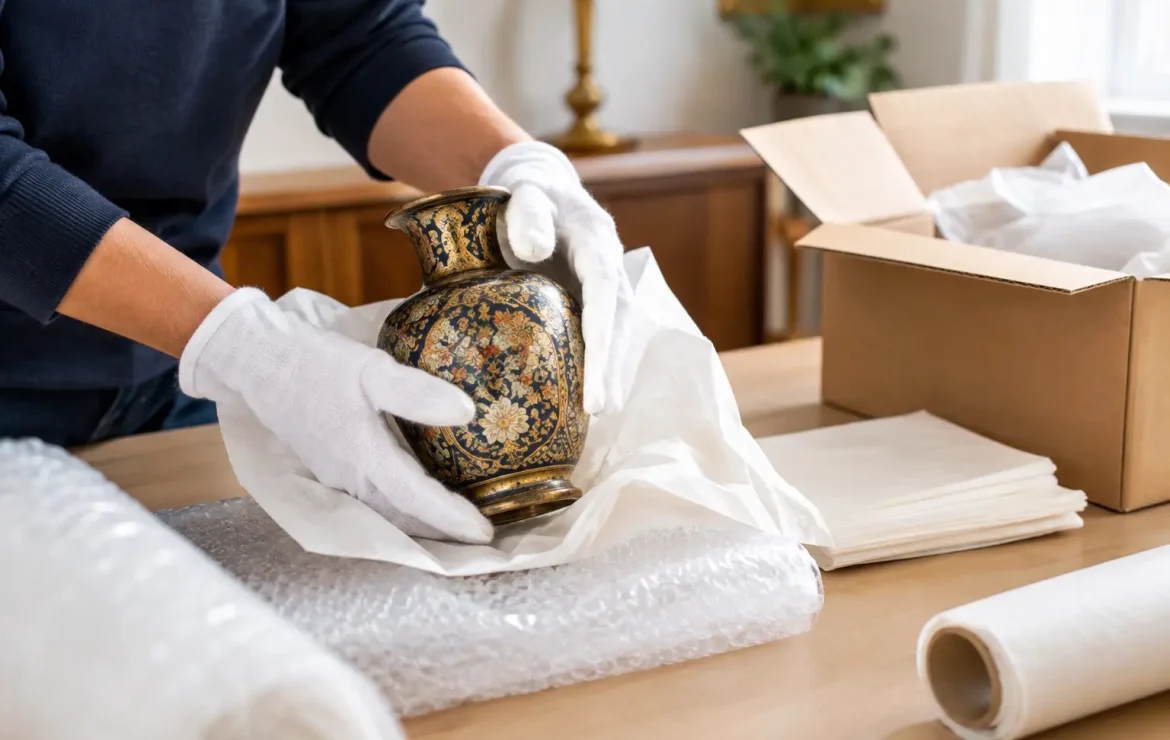
Wrap every piece separately. Begin with a layer of acid-free tissue, then add packing paper or bubble wrap as needed. For plates, stand them on edge in a reinforced carton rather than stacking them flat. This distributes pressure more effectively when the box is handled correctly.
Cups, bowls and vases need extra paper inside as well as around the outside. Pay close attention to handles, rims, spouts and narrow necks, as these are common break points. Pack the heaviest pieces at the bottom, fill all gaps firmly with crumpled paper, and finish with a cushioned top layer before sealing the carton.
A box should feel full but not forced. If you can hear or feel anything shifting when you gently rock it, add more void fill. Keep cartons manageable rather than making one very heavy box. A removalist cannot handle a carton safely if its weight makes it awkward to lift.
Mirrors, paintings and framed artwork
Cover the face of glass with painter’s tape in a loose criss-cross pattern if appropriate. This does not stop glass from breaking, but it may help hold fragments together if an accident occurs. Do not apply tape directly to valuable or delicate frames.
Place a layer of acid-free tissue over the front, add cardboard corner protectors, then wrap the entire piece in a clean moving blanket. A framed item should travel upright, never flat beneath other belongings. Mark the carton or wrapping clearly with “Fragile”, “Glass” and “This Side Up”.
For valuable paintings, works with flaking paint, ornate gilded frames or oversized mirrors, professional packing is the safer option. The cost of specialist handling is often modest compared with restoration work or a loss in value.
Timber furniture, clocks and cabinets
Clean timber furniture gently before packing and ensure it is completely dry. Wrap protruding features such as feet, finials and carved details with soft padding first, then protect the wider surfaces with furniture blankets. Secure blankets with tape around the blanket, not around the furniture itself.
Remove shelves where possible and wrap them individually. Lock doors only if the lock is sound. Otherwise, use soft cotton ties or protective wrapping to keep doors closed without placing pressure on old hardware. For cabinets with glass doors, remove the glass if it can be done safely; if not, protect the doors carefully and keep the unit upright.
Longcase clocks, mechanical clocks and items with pendulums require special care. Follow the maker’s instructions where available, and avoid moving a clock mechanism without understanding how it should be secured. This is one category where a specialist can prevent damage that is not immediately visible.
Upholstered and leather antiques
Vacuum upholstered pieces gently using a soft brush attachment, then cover them with breathable fabric or clean moving blankets. Plastic can be useful as an outer weather barrier for a short journey, but do not leave leather or fabric antiques sealed in plastic for extended periods. Trapped humidity can encourage mould and affect finishes.
Keep upholstered antiques away from sharp-edged furniture, tools and cartons with exposed staples. During loading, blankets should be secured so they cannot slip and expose the fabric.
Label cartons for safer handling
“Fragile” is useful, but it is not enough on its own. Label each carton on at least two sides with its contents, the room it belongs in and any handling instructions. For example: “Dining room – antique crystal – keep upright”. This helps both the loading team and the person unpacking at the other end.
Make a short inventory of high-value items and assign each one a number that matches its label. It may feel overly organised for a small move, but it saves time when you are checking that every antique has arrived before cartons are broken down or placed into storage.
Load antiques in the right order
Careful wrapping can be undone by poor loading. Fragile antiques should be loaded after heavy, stable items have been secured, then positioned where they cannot shift or be crushed. They should never sit beneath mattresses, appliances, heavy cartons or loose furniture.
Keep framed pieces and mirrors upright against a padded, stable surface. Use straps and furniture pads to prevent movement, but do not overtighten straps across delicate frames or veneered panels. Heavy antique furniture should be secured low in the truck, with vulnerable surfaces facing inward and protected from contact points.
Weather also matters in Sydney and regional NSW. Rain, heat and humidity can affect timber, leather, paper and artwork. Have protective covers ready before loading begins, minimise the time items spend outside, and move antiques directly into a dry, prepared area at the new property.
Consider professional packing for irreplaceable pieces
Packing antiques yourself can work well for small, sturdy or lower-value items when you have time and suitable materials. The trade-off is that the more complex the item, the greater the risk of an expensive mistake. Large mirrors, marble-topped furniture, antique clocks, fine art and fragile display cabinets benefit from experienced handling, purpose-built materials and a secure loading plan.
A professional, fully insured removalist can assess difficult pieces before moving day, provide appropriate packing materials and manage lifting, transport and placement. China Bear Removals can assist with high-care antiques and fine art alongside household or office moves, helping customers keep their relocation controlled and stress free.
Give treasured pieces the time they deserve. A calm packing process, clear labels and careful loading will protect more than an object – they help preserve the history, craftsmanship and memories that made it worth keeping.
Related posts