

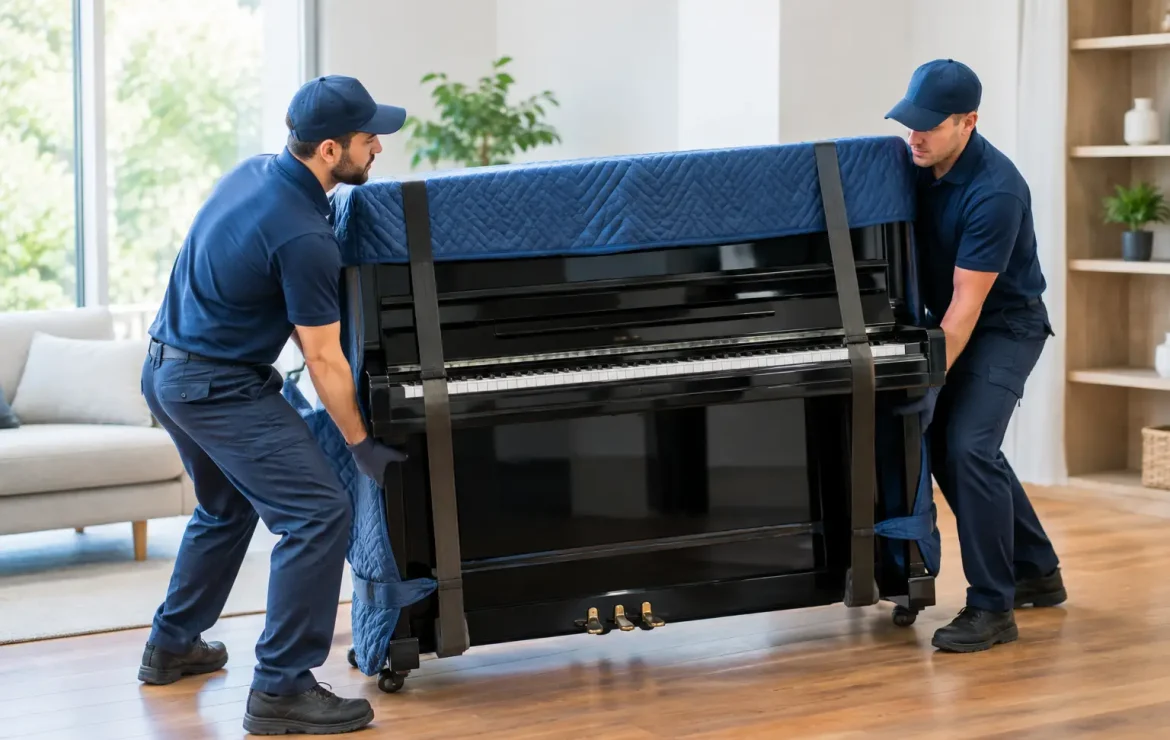
A piano is not simply another heavy item on moving day. Its weight is concentrated in an awkward shape, its finish can mark easily, and the internal mechanism is far more delicate than it appears. Knowing how to move a piano safely means protecting the people lifting it, the property around it and the instrument itself.
An upright piano can weigh anywhere from 130 to more than 300 kilograms. Grand and baby grand pianos can be heavier again, with much of that weight sitting in the cast-iron frame. A rushed lift, a poorly judged turn or one missed step can cause serious injury, damage floors and walls, or leave the piano out of tune or structurally compromised.
For many Sydney moves, professional piano transport is the sensible choice, particularly where stairs, narrow terraces, apartment lifts or valuable instruments are involved. If you are planning the move yourself, careful preparation and the right equipment are essential.
Start with the piano, the property and the route
Before anyone lifts a corner, identify the piano type and take accurate measurements. Measure the piano’s height, width and depth, then compare those dimensions with every doorway, hallway, gate, lift and turn along the route. Do not assume it will fit because it entered the home years ago. Renovations, furniture, security screens and tighter access points can change the situation.
An upright piano is usually moved on a heavy-duty piano trolley and kept upright where possible. A grand piano requires a different method: it is generally wrapped, secured on its long side on a piano skid board, and moved with specialist equipment. Its legs and pedal lyre are vulnerable components, not handholds.
Walk the complete path from the piano to the truck. Look for uneven paving, loose gravel, wet surfaces, low awnings, sharp corners, sloping driveways and changes in level. Inside, remove rugs, small furniture, lamps and loose items that could create a trip hazard. Protect door frames, floors and walls before the move begins rather than trying to avoid damage in the middle of a lift.
For apartment buildings, arrange lift access and check loading-zone rules with building management. In busy Sydney streets, a truck parked too far from the entrance turns a controlled move into a long and tiring carry. A clear, legal loading position matters.
Use proper piano-moving equipment
Household blankets and a basic hand trolley are not enough for most pianos. The equipment needs to stabilise the load and protect the finish while allowing the team to move it in a controlled way.
For a planned piano move, the core equipment normally includes:
- Thick padded moving blankets and stretch wrap to protect the cabinet and secure the padding
- A rated piano trolley or dolly with straps suited to the piano’s weight
- Heavy-duty ratchet straps to secure the piano in the truck
- Floor protection, such as runners or boards, where timber, tiles or carpet need safeguarding
- A suitably sized truck with a loading ramp or tailgate lifter
Never rely on the piano’s castors to roll it across a room or driveway. On many pianos, the castors are designed to reposition the instrument slightly, not carry its full weight over distance. They can catch on joins in flooring, mark timber, sink into soft ground or fail without warning.
Avoid lifting straps that place excessive pressure on the cabinet, lid or pedals. If a strap cannot be positioned around a strong, stable part of the piano without risking damage, stop and reassess the method.
Build a capable team, not a crowd
A piano move needs enough people to control the load, but more people does not automatically make it safer. Everyone involved should understand their role, be physically capable of lifting, wear enclosed non-slip footwear and be able to follow directions immediately.
Choose one person to call the movement. They should communicate each stage before it happens: lift, pause, turn, lower and secure. No one should be trying to manoeuvre the piano while also answering a mobile, holding a door open or improvising around an obstacle.
Use clear language and short commands. If someone loses their grip, feels pain or cannot see where they are stepping, the team must stop. Trying to save a falling piano is one of the most dangerous moments in any move. Step clear rather than putting hands or feet beneath it.
Children, pets and onlookers should be kept well away from the route. A piano requires full attention from every person handling it.
Protect the instrument before it leaves the room
Close and lock the keyboard lid if the piano has a lock. If it does not, secure it gently so it cannot open during transport. The top lid, music stand and any removable parts should be protected from movement. Do not tape directly onto polished timber, veneer or painted surfaces, as adhesive can lift finish or leave residue.
Wrap the complete cabinet in clean padded blankets, paying particular attention to corners, pedals and the base. Secure the blankets with stretch wrap or purpose-made straps, but do not pull wrapping so tightly that it places pressure on fragile details.
For an upright piano, keep the keyboard side protected and avoid tilting it more than needed. A brief controlled tilt to position a trolley is different from laying an upright on its side for a long journey. The latter can affect internal components and should be avoided unless a qualified piano-moving team determines the instrument and transport setup can accommodate it.
Grand pianos should not be dismantled casually. Removing legs and placing a grand on a skid board requires a stable process, correct tools and an understanding of where the weight sits. This is firmly in specialist territory.
Stairs, tight access and difficult sites change the decision
Stairs are where a manageable piano move can become unsafe. The weight shifts quickly on an incline, the people below the piano carry greater risk, and there may be no room to reposition hands or turn around. Narrow staircases and landings add another layer of difficulty.
If stairs are involved, do not treat the move as a standard household lift. The same applies to balconies, steep driveways, heritage homes with narrow entries, difficult rear-lane access and large pianos that need to pass through a tight turn. A professional assessment may find that a stair climber, external lift, crane lift or a different access route is required.
This is not overcautious planning. It is a practical response to the cost of getting it wrong. Repairing a damaged piano cabinet, replacing a cracked stair tread or dealing with an injury is far more disruptive than arranging suitable equipment from the start.
Load and transport the piano securely
Once the piano reaches the truck, it must be loaded with the same care used inside the home. Use a ramp rated for the load, keep the team balanced on both sides where the space permits, and move slowly. Never leave a piano unsecured in the truck while other furniture is loaded around it.
Position it against a solid side of the truck or in a designated secure area. Use rated straps anchored to the vehicle’s tie rails so the piano cannot slide, tip or shift under braking. Padding should remain between the piano and any hard surface. Do not stack cartons, furniture or loose items against it.
Drive smoothly and allow extra space for braking and turns. Sydney traffic, speed humps and uneven roads can create movement inside the truck, even on a short trip. A well-secured piano should not rely on other belongings to keep it in place.
At the destination, inspect the new route before unloading. Wet weather may have changed the surface conditions, a removal truck may block access, or a parked car may reduce the turning space. Taking five minutes to reset the plan is better than forcing the final stage.
Know when professional piano movers are the safer option
DIY can be reasonable for a small upright piano moving a short distance on one level with clear access, suitable equipment and an experienced team. Even then, the risks need to be taken seriously.
Professional help is strongly recommended for grands, antiques, high-value instruments, stairs, apartment buildings, tight access, long carries and interstate transport. A specialist team brings trained handlers, protective materials, lifting equipment and a vehicle set up to carry heavy items securely. Fully insured removal services also provide reassurance that a complex move is being managed responsibly.
For Sydney and regional NSW customers, China Bear Removals can incorporate careful piano handling into a wider household, office or specialist-item relocation. That matters when the piano is only one part of a move that also includes antiques, furniture, storage or a difficult access plan.
After the piano is in its new position, give it time to settle into the room’s temperature and humidity before arranging a tuning. Even a carefully transported piano can need adjustment after a move, particularly if conditions between properties are very different.
The safest piano move is the one planned around the actual instrument and access conditions, not the one that looks quickest on moving day. When the weight, route or value gives you any doubt, pause and arrange the right support before the first lift.
Related posts