

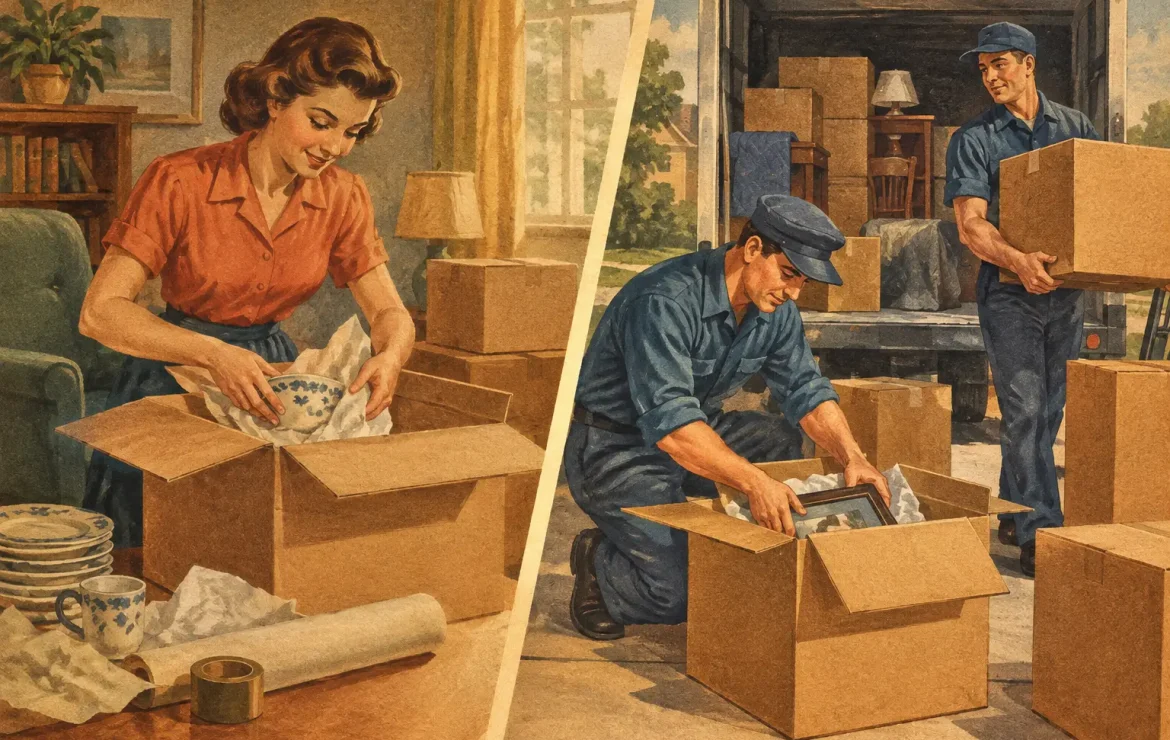
A move can look manageable until the cupboards, garage shelves and spare room start coming apart. The real choice in self packing versus professional packing is not simply who puts items in boxes. It is about how much time you have, what needs protecting, how confident you feel handling the workload, and how smoothly you need moving day to run.
For some Sydney households, packing independently is a sensible way to keep direct costs down. For others, particularly families, busy professionals, businesses and owners of valuable pieces, professional packing removes a major source of pressure and risk. The right approach depends on the move in front of you.
What self-packing really involves
Self-packing gives you control over every carton. You decide what stays, what goes to charity, what is stored and what is thrown away. You can pack gradually over several weeks, label boxes in your own system and keep private paperwork or sentimental items close at hand.
That control can be valuable when you have time and a modest amount of furniture and belongings. It may also suit a smaller local move where the contents are straightforward, there are no fragile collections to manage, and you are comfortable lifting, wrapping and organising your home room by room.
The work is often underestimated, however. A three-bedroom home can contain hundreds of individual items, many of them awkward to protect properly. Glassware, framed pictures, lamps, electronics, kitchen appliances and loose garage equipment all need suitable wrapping and cartons. Packing the ute is only one part of the job. Before that, each item must be prepared to cope with handling, stacking, transport and unloading.
Self-packing also requires a realistic plan for materials. Thin cartons, overfilled boxes and household rubbish bags are common causes of preventable damage. Heavy books need small, sturdy cartons; linen and clothing can go into larger boxes; fragile items need clean packing paper, cushioning and clear labels. A carton that is too heavy is difficult to carry safely, while one with empty space can collapse or allow contents to shift in transit.
The benefits and limits of professional packing
Professional packers bring an organised process to a task that can otherwise take over the household. A trained crew can pack efficiently, use suitable materials for different items and prepare furniture for safe transport. This is especially helpful when settlement dates, lease handovers or office deadlines leave little room for delays.
The benefit is not just speed. Experienced packers know how to protect delicate edges, separate glass and ceramics, secure drawers, wrap artwork and keep cartons stable. They are accustomed to working around stairs, tight access, apartment lifts and the everyday complications of Sydney moves.
Professional packing is usually the stronger option when belongings have a high replacement cost, a high sentimental value or both. Antiques, fine art, mirrors, heirlooms and specialist equipment need more than a blanket placed over them. They need the right packing method and careful handling from the home or premises through to delivery.
There is, naturally, an upfront cost. If every item in the house is professionally packed, the service will cost more than doing it yourself. Yet the comparison should include your own time, the cost of boxes and materials, potential breakages, time away from work and the strain of packing late at night before a move. For many customers, the extra support is worthwhile because it makes the relocation more controlled and less disruptive.
Self packing versus professional packing: the key decisions
The best choice is often not all or nothing. Start with the items that would cause the greatest problem if damaged or left until the last minute. This may be a kitchen full of glassware, a collection of artwork, an executive office, or simply a home where everyone is already stretched by work, school and the logistics of changing address.
Time available before moving day
If you can dedicate consistent time over several weeks, self-packing can work well. Allow more time than you think you need. Packing tends to slow down once you reach the items used every day, the garage, paperwork, cables and cupboards that have not been sorted for years.
If you are moving at short notice, completing a renovation, coordinating a settlement or relocating an office without downtime, professional packing can protect the schedule. A packing crew works to a clear plan, allowing the removal team to arrive on moving day with properly prepared cartons and furniture.
The value and fragility of your belongings
A basic move with durable furniture and standard household goods has different needs from a move involving fine art, antiques, delicate décor or sensitive business equipment. The more specialised the item, the less sensible it is to rely on improvised wrapping.
Professional packing is also useful for larger televisions, computers, monitors and equipment with removable parts. Proper preparation reduces movement during transport and makes unpacking at the other end more straightforward. For commercial clients, careful packing can help keep documents, workstations and stock organised by team, room or function.
Your physical workload
Packing is repetitive physical work. It involves bending, carrying cartons, moving items off shelves and making many small decisions over long days. People often focus on the heavy furniture but find the packing stage more tiring because it starts well before the ute arrives.
If you have an injury, limited mobility, young children, caring responsibilities or a demanding job, outsourcing some or all of the packing can be a practical safety decision. It helps preserve your energy for the tasks only you can do, such as finalising utilities, managing keys and settling into the new space.
Budget beyond the quote
Self-packing can reduce the initial moving bill, particularly for organised movers who already have time and suitable materials. But it is worth comparing the complete cost, not just the packing-service fee. Factor in cartons, tape, packing paper, protective wraps, possible storage, lost work hours and the chance that poorly packed items need replacing.
China Bear Removals can provide reusable boxes with booked moves, helping customers reduce cardboard waste and avoid buying disposable cartons unnecessarily. Reusable boxes are sturdy, stack neatly and support a more responsible move, particularly for households that want to cut down on packing rubbish.
A practical middle ground: partial packing
Partial packing is often the best fit for customers who want to stay involved without carrying the entire burden. You might pack clothing, books, toys and everyday items yourself, then arrange professional packing for the kitchen, fragile décor, artwork, antiques or home office.
This option lets you control the areas that are personal or easy to organise while placing the higher-risk work with trained packers. It is also useful for commercial relocations. Staff can pack their personal desk items and clearly identify essential files, while professionals manage shared equipment, meeting-room furniture, archive boxes and breakable technology.
Clear communication makes partial packing work. Before the crew arrives, separate items that will travel with you, such as passports, medications, jewellery, keys, chargers and important documents. Let the team know about anything that needs special attention, any boxes already packed, and the rooms or items you want them to handle.
How to make either option safer
Whether you pack yourself or use a professional service, preparation improves the outcome. Declutter before packing begins, rather than paying to move items you no longer want. Keep box labels specific enough to be useful – “Kitchen – everyday plates” is better than simply “Kitchen”. Note fragile contents on more than one side of the carton and avoid mixing heavy objects with delicate ones.
For self-packers, resist the temptation to fill every carton to the top. Heavy boxes create handling risks and can split at the base. Use smaller cartons for books, records and tools, and larger cartons for lighter belongings. Fill gaps so contents cannot shift, but do not force lids closed or stack cartons that are already bowed.
For professionally packed moves, walk through the property before work starts. Point out items of particular value, identify anything that is not moving, and confirm access arrangements such as parking, lifts, loading zones and stairs. A good plan before packing begins helps the whole move stay safe and secure.
Choosing with confidence
There is no prize for doing every part of a move yourself. Self-packing is a sound choice when time, energy and the nature of your belongings make it practical. Professional packing offers greater protection and convenience when the move is complex, time-sensitive or filled with items you cannot afford to see damaged.
The most helpful decision is the one that leaves you prepared on moving day, with your belongings protected and enough capacity to focus on the new home or workplace ahead.
Related posts